
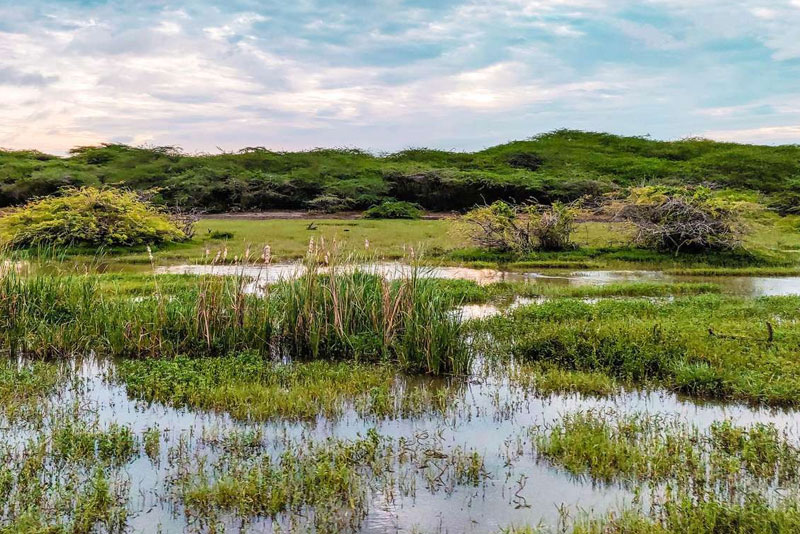
Bundala National Park in Sri Lanka is a premier destination for bird watchers, hosting over 197 bird species. Large flocks of greater flamingos, often exceeding 1,000 birds, migrate here from India. Other commonly seen birds include cormorants, Asian openbills, painted storks, lesser whistling ducks, lesser adjutants, Eurasian coots, and black-necked storks.
As Sri Lanka’s first Ramsar wetland, Bundala is recognized as an Important Bird Area and a UNESCO Man and Biosphere Reserve. Beyond birds, the park supports diverse wildlife such as elephants, leopards, jackals, fishing cats, porcupines, and mugger crocodiles. Its rich biodiversity and scenic beauty make it a nature lover’s paradise. Yala National Park is located nearby, adding to the region’s wildlife appeal.
Bundala National Park Safari Guide
Opening Hours:
Bundala National Park is open daily from 6:00 a.m. to 6:00 p.m.
Safari Duration:
A standard safari lasts around 3 hours. For those seeking more adventure, extended safaris, full-day excursions, or specialized birdwatching tours can be arranged.
Key Ecosystems in Bundala National Park:
- Dry Mixed Evergreen Forests
- Dry Thorny Scrublands
- Riverine Forests
- Coastal Grasslands
- Sandy Beaches and Dunes
- Brackish Lagoons
- Salt Marshes
- Mangrove Areas
Park Size:
The park covers a total area of 3,339.38 hectares.
Conservation Status and Recognition:
- National Park
- Ramsar Wetland of International Importance
- UNESCO Man and Biosphere Reserve
- Designated as an Important Bird Area (IBA)
Geography and Climate:
- Altitude: Sea level up to 20 meters
- Average Annual Rainfall: 900–1,300 mm
- Mean Temperature: 27°C
Nearby Towns and Facilities:
- Closest towns: Hambantota, Tissamaharama, Wirawila, Kirinda
- Nearest hospital: Debarawewa Base Hospital
Access Routes to Bundala National Park:
- Colombo → Galle → Bundala: 250 km
- Galle → Hambantota → Bundala: 142 km
- Nuwara Eliya → Ella → Bundala: 151 km
- Tissamaharama → Bundala: 19 km
Highlights of a Bundala Safari:
Visitors can expect to see:
- A variety of aquatic and migratory birds
- Sri Lankan Elephants
- Freshwater crocodiles
- Marine turtles during nesting season
Best Time to Visit:
The ideal period to explore Bundala is from September to March.
Safari Tips:
- Timing: Start early morning or late afternoon to avoid the strongest sun.
- Weather: Expect sunny conditions; Bundala is located in a dry zone with moderate humidity (~80%).
- Sun Protection: Sunscreen, hats, and light clothing are recommended.
- Hydration: Bring plenty of water to stay hydrated.
- Safety: Always follow your guide’s instructions. Do not leave the safari vehicle unless explicitly allowed, as wild animals, including elephants, can be dangerous.