
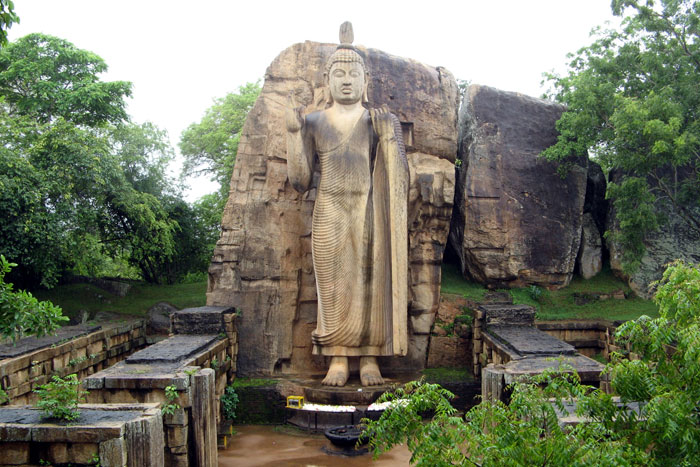
Anuradhapura, situated in Sri Lanka’s North Central Province, is a city steeped in history. Its significance reached its peak in the 4th century BC when the great King Pandukabhaya established it as his capital. The city once flourished with magnificent structures, including towering buildings, statues, and dome-shaped shrines, showcasing the grandeur of the era.
Remarkably, many of these architectural marvels have withstood the test of time, standing as a testament to the exceptional skill of the island’s ancient craftsmen. Visitors to Anuradhapura can explore a wealth of historic sites such as Jaya Sri Maha Bodhiya, Ruwanweliseya, Isurumuniya, and Abhayagiri Vihara, each offering a glimpse into the city’s glorious past.
Agriculture was the backbone of Sri Lanka in ancient times, much as it remains in rural areas today. The kings of Anuradhapura constructed an intricate network of tanks and reservoirs to support farmers in the challenging dry zone, creating one of the most sophisticated irrigation systems of its time.
A pivotal chapter in the city’s history was the introduction of Buddhism to Sri Lanka. According to the epic chronicle Mahavamsa, Thera Mahinda, the son of India’s Emperor Ashoka, arrived on the island during a full moon in June. There, he met King Devanampiyatissa, who ruled at the time. This historic encounter led the king—and eventually the entire nation—to embrace the teachings of Lord Buddha, marking a profound transformation in the spiritual life of the island.