
Sigiriya Rock Fortress
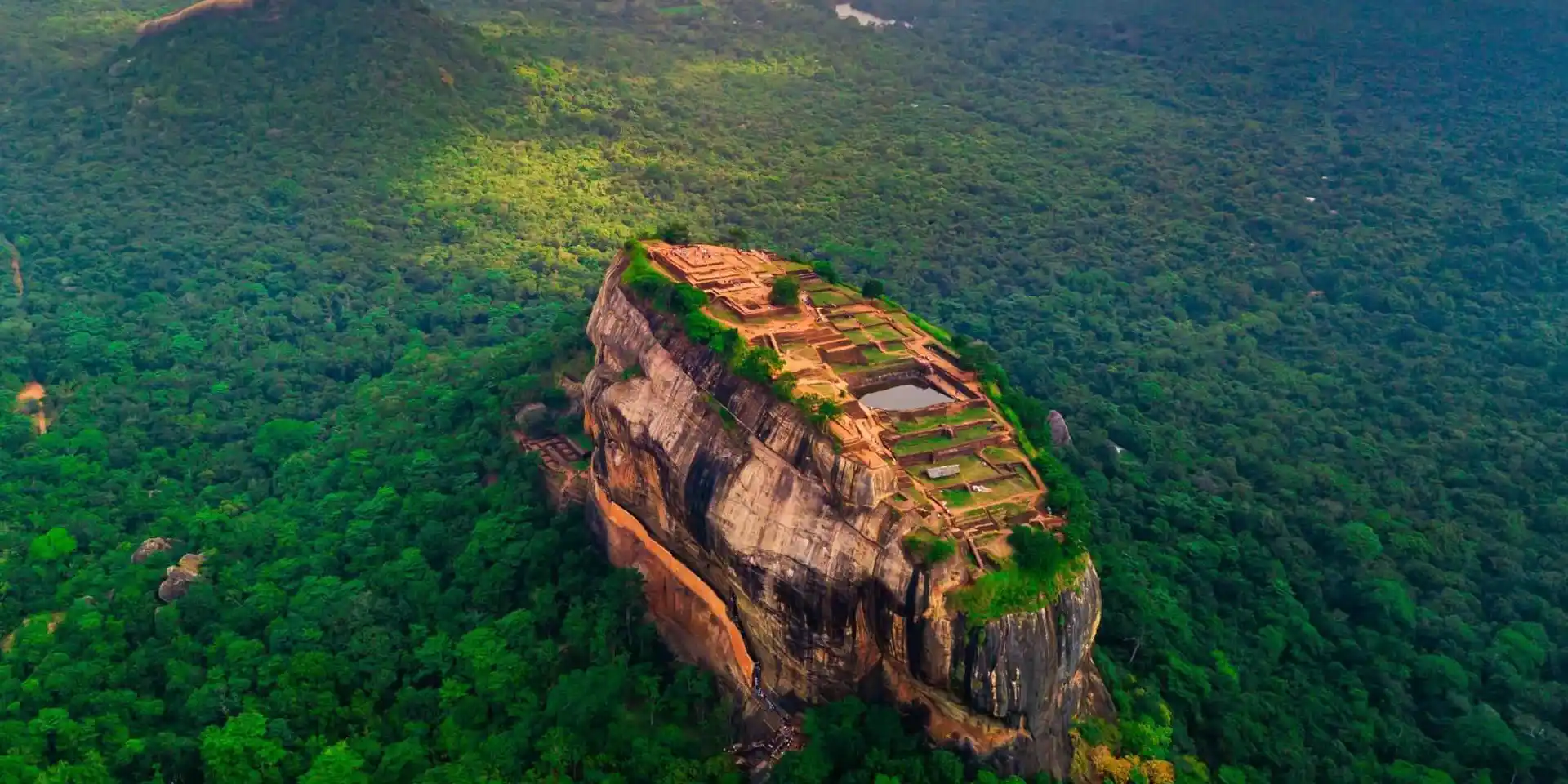
Sigiriya Rock Fortress is the most popular heritage attraction in Sri Lanka. Often referred to as Lion Rock, its ancient name Sinha-Giri comes from the enormous brick lion structure that once marked the palace entrance—today, only the lion’s paws remain at the base of the rock. This remarkable stronghold dates back to the 5th century and was built by King Kassapa (477–493 CE). Rising dramatically about 600 feet above the plains, the summit of Sigiriya holds the remnants of the king’s royal palace. Visitors can reach the top by climbing roughly 1,200 steps, some of which originate from Kassapa’s era. At the foot of the rock lie the remains of an extensive royal pleasure garden, considered one of the most sophisticated landscape creations in the region. The archaeological importance of Sigiriya is immense and arguably unmatched in South Asia.
Unlike many ancient sites in Sri Lanka that are tied to religious traditions, Sigiriya is not a sacred site. Instead, it stands as a rare example showcasing the secular art, architecture, and advanced cultural life of early Sri Lankan civilization. Along the ascent to the rock’s summit are the famous fresco pockets containing 21 vivid paintings of graceful female figures. Historical accounts suggest that nearly 500 such frescoes once decorated the rock walls leading upward. These artworks show stylistic similarities to classical Indian art, particularly the paintings in Cave No. 16 of the Ajanta caves in central India. Yet, the use of a unique copper-blue pigment and a special preservative coating highlights clear technical differences from the Indian tradition. The Sigiriya frescoes also indicate the presence of a realist artistic trend, a feature that appears to be distinctive to this site within the broader scope of ancient Indian classical art. Today, the entire ancient city of Sigiriya is recognized as a UNESCO World Heritage Site.
The Eighth Wonder of the World – Sigiriya Rock Fortress, Sri Lanka
Key Highlights
Introduction to Sigiriya Rock Fortress
Rising majestically from the central plains of Sri Lanka, Sigiriya, also known as Lion Rock, is an ancient rock fortress that has fascinated visitors for centuries. This UNESCO World Heritage Site showcases remarkable architectural and engineering feats from the 5th century AD.
The Sigiriya Pleasure Gardens
Surrounding the base of Sigiriya Rock are the royal pleasure gardens, sprawling across approximately 15 hectares. These gardens, considered among the oldest landscaped gardens in the world, were designed to harmonize with the natural terrain while minimally altering it. They reflect the opulent lifestyle of the Sigiriya royalty, who often hosted elaborate ceremonies and water-based entertainment for nobles, guests, and members of the royal court.
Water Gardens
The Sigiriya water gardens form an elegant network of ponds, fountains, and green terraces. Designed with perfect symmetry, the main walkway and an additional causeway split the large central pool into four parts, with a small island positioned in the middle. These pathways link the water features to the surrounding landscaped areas.
Beyond this pool lie a pair of matching fountains arranged on both sides of the central path. Remarkably, these ancient water jets still activate during the rainy season, even after 1,500 years. Close to the fountains are the remains of Sigiriya’s summer palaces. The garden complex concludes with an elevated octagonal pool.
The tranquil atmosphere of these gardens later inspired renowned architect Geoffrey Bawa, who drew on their design principles when creating the Blue Water Hotel in Wadduwa, Sri Lanka.
Overall, the Sigiriya water gardens showcase sophisticated ancient water-management systems. Their pools, fountains, and carefully planned waterways highlight how water served not only as a symbol of elegance but also as an essential resource for the inhabitants.
Boulder Gardens
From the main approach, visitors enter the Sigiriya boulder gardens, where the layout incorporates the natural cluster of massive stones at the foot of the rock. These formations were once integrated with brick and timber structures, now long vanished, though the carved sockets and grooves that once held walls and pillars can still be seen on the rock surfaces. Unlike the formal symmetry of many ancient gardens, this one follows the land’s natural shapes, using irregular contours and scattered boulders to create a striking, almost contemporary aesthetic.
The garden also includes three notable natural caves—Deraniyagala, the Cobra Hood Cave, and the Asana Cave. Remnants of rare fifth-century paintings remain on their ceilings. An ancient inscription reveals that Buddhist monks had used this area for meditation as early as the third century BCE, making it the oldest known archaeological zone within the Sigiriya complex. The atmosphere of these boulder gardens later inspired renowned architect Geoffrey Bawa, who drew from their harmony with nature when designing the Kandalama Hotel in Dambulla, Sri Lanka.
Terrace Gardens
The terrace gardens of Sigiriya rise gently from the boulder gardens, following the natural slope of the foothill until they reach the base of the rock fortress. This landscape was crafted to offer a sequence of gradually elevating viewpoints. Within this area lies Boulder Arch No. 1, where the designer intentionally routed a staircase through the natural rock formation to create a dramatic visual impression. The terraces themselves were constructed using brick and marble, and remnants of brick-built platforms can still be seen nestled between the boulders. A marble staircase ascends through these terrace gardens, ultimately leading to the ancient stairway of Sigiriya’s iconic Lion Rock.
Lion Rock Stairway and Sculptures
A grand staircase carved into the rock leads visitors toward the summit, once flanked by monumental lion paws that served as symbolic guardians. The palace complex atop the rock offered panoramic views of the surrounding lands.
Frescoes, Mirror Wall, and Graffiti
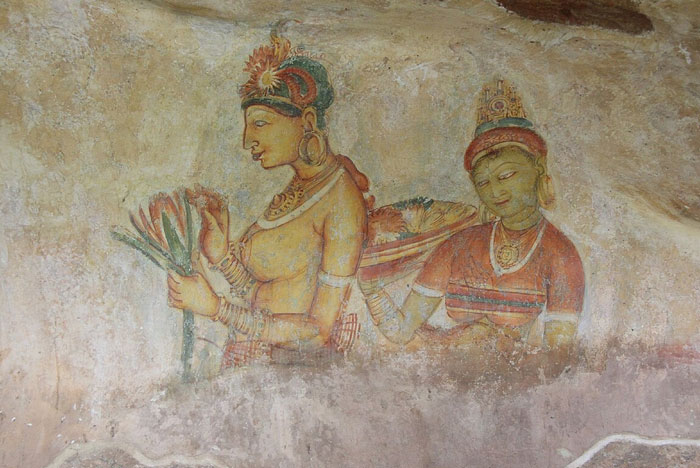
The rock shelters along the ascent are adorned with exquisite fresco paintings, depicting celestial maidens. The Mirror Wall, once polished so well that the king could see his reflection, contains ancient inscriptions and graffiti left by visitors over centuries.
Moats, Ramparts, and Reservoirs
Defensive structures include two moats forming a square around the rock, fed by the nearby Sigiriya Wewa reservoir. Three sets of ramparts extend outward from the moats, though today only brick foundations remain. Crocodiles still inhabit the outer moat, and the original drawbridge has been replaced by a modern pathway. Remnants of sentry chambers mark the inner bank of the moat, guiding visitors toward the grand entrance and the symmetrical layout of the water gardens beyond.
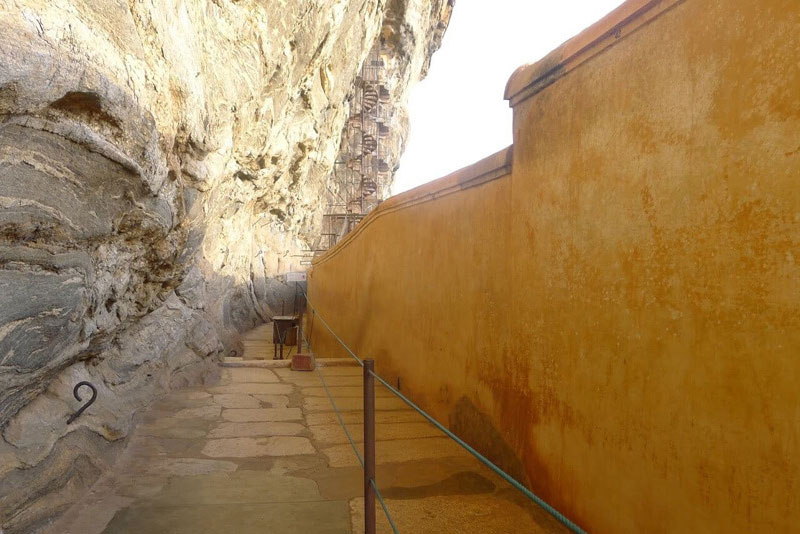
At Sigiriya Lion Rock in Sri Lanka, the terrace gardens culminate in a broad, square-shaped viewing platform. Beyond this point, a 19th-century iron staircase traces the path of what was likely an original wooden stairway. Along the route, numerous rock-carved steps remain visible, guiding visitors toward the iconic lion’s paw sculpture. Along this modern pathway, there are two remarkable sites that are considered must-see highlights of Sigiriya.
Sigiriya Lion Rock Palace Complex (Sigiriya Rock Fortress)
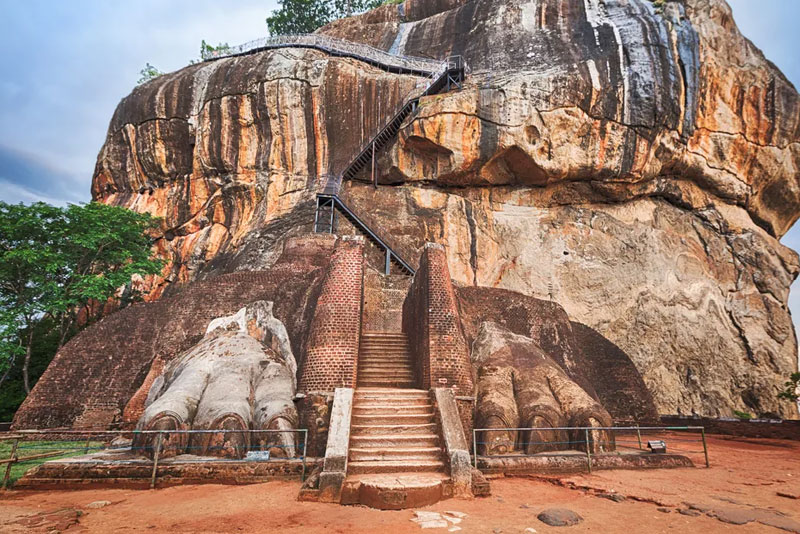
A modern staircase now roughly traces the original route to the summit of Sigiriya, leading visitors to the historic lion rock palace complex. The palace once spanned the entire 1.5-hectare plateau at the top of the rock. Today, only the foundations, a carved rock seat, and the royal pool remain visible. The true highlight of the summit, however, is the panoramic 360-degree view of the surrounding plains.
Breathtaking Views from Sigiriya
Rising 600 feet above the surrounding plains and 1,144 feet above sea level, the summit of Sigiriya offers stunning vistas in every direction. The gneiss rock formations take on a mesmerizing array of colors as the sun sets. From the western edge of the cliff, visitors can admire the royal pleasure gardens below, while to the north lies the Mapagala mountain and to the south, the well-known Pidurangala Rock. On clear days, the distant stupas of Anuradhapura appear as tiny dots to the northwest. The extraordinary views alone make the climb to Sigiriya worthwhile.
Foundations of the Sigiriya Palace
The remains of the royal palace occupy the entire summit plateau. At the highest point, the foundations of King Kassapa’s private bedchamber can still be seen. The palace complex was designed to follow the natural southern slope of the rock. Among the ruins, two rock-cut pools are visible, one of which is bordered by smooth paving stones. Nearby, a finely carved stone seat is thought to have belonged to King Kassapa himself.
Start Your Sri Lanka Adventure Today!
Private drivers, custom tours, and unforgettable experiences with GoMyWay.lk.